There is a question that is dreaded by book lovers everywhere. As an English major, English teacher, and–even more generally–a reader, people ask me the same question over and over and over. This is a question that, I believe, is asked specifically by people who don’t read. These people think they’re making polite conversation but, to be honest, this question stresses me out. After being asked so many times, I came up with a pretty standard answer that I can rattle off just to have something to say other than, “It’s really not that simple.” The question: What is your favorite book?
If you are a book lover, you know that there is no straightforward answer to this question. Readers have a list of hundred of books they love, no less than 25 favorites, and often have their favorites broken down by genre or time in their life or topic. How am I expected to answer that question without talking nonstop for 20 minutes? Plus, if I’m going to tell you what my favorite book is, you bet I’m going to explain not only why it’s my favorite but also why you, too, should read it.
If you ask me what my favorite book is, I will be polite. I will pick one book and probably explain why in only a few sentences. However, this question haunts me. All the time, I ask myself what my favorite book really is. I’ve decided recently that I don’t really have one. However, I have also decided that I believe I can narrow down my favorite books into a list of 10 books.
Now, before I share this list with you, I have to explain a few things. First, since I have already explained how impossible it is to pick favorite books, I am going to cheat a little bit when making my list. Some of these books are actually complete series or a specific author. (It’s my list; I can do what I want.) Second, this list is not in a specific order. They aren’t ranked from best to worse. The order they’re listed in is complete arbitrary. Third, this list changes as I read more and more. In fact, one of the books on this list I just read last week. Basically, take it with a grain of salt. Fourth, I picked these books because they’re books I love. I did not pick them because I think they’re the best books ever written. That list would look much different and include books that I certainly don’t like. And, finally, this isn’t the be-all and end-all of my favorite books. It’s simply an answer to the worst question of all time.
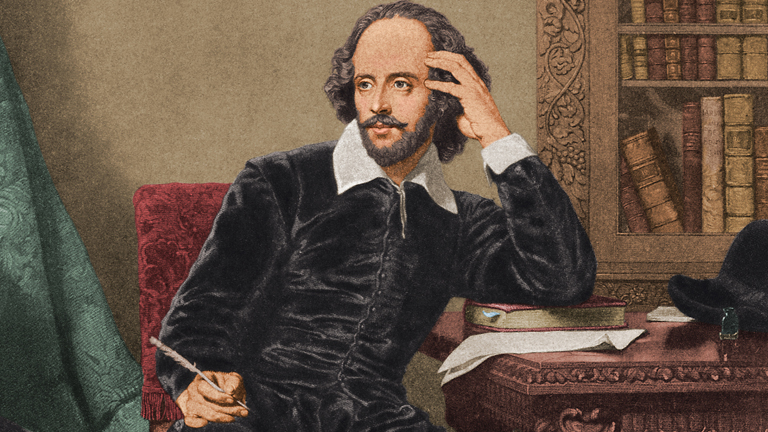
1. Shakespeare: If you know me at all, you’re probably thinking, “Duh. It’s Madison.” You’d be right, of course. I mean, I am going to graduate school for a Master’s in Shakespeare. I fell in love with the bard as a young girl, my affair beginning with a reading of A Midsummer Night’s Dream in seventh grade English. Reading Shakespeare causes my heart to swell with passion; the true enchantment of the bard is in the way he takes one’s whole soul prisoner. There is a magical quality to his writing that is rarely seen in any other body of work—at least, not to the breadth we encounter it in Shakespeare’s writing. Plus, the plays remain relevant in both theme and humor. Anyone who claims otherwise needs to spend some time alone with the anthology of his works. Shakespeare feeds my curiosity in a way no one else can. There are very few texts I actually want to read more than once, but every time I read one of his plays, I notice something new. I have a feeling I will never fully understand the plays and, that, my friends, is why I love his writing.
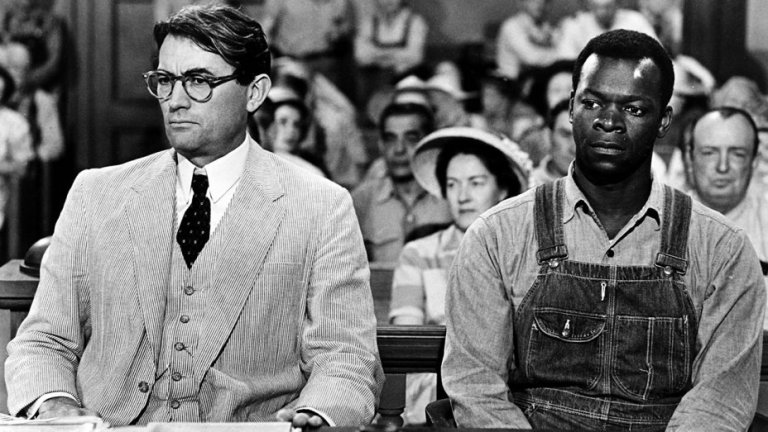
2. To Kill a Mockingbird – Harper Lee: Do I even need to explain why this is one of my favorites? Atticus Finch has been my literary hero since reading this book the summer before high school. I can still tell you exactly where I was sitting as I read the iconic courtroom scene. As a teacher, this book’s importance in the Western cannon has been revealed to me over and over. It’s not just about race (even though that, of course, is important). It’s about not being prejudice toward anyone, whether it’s their family, their socioeconomic status, their race, their job, where they’re from, what people say about them, etc. Not only does this book teach the most solid set of moral values aside from the Bible itself, it’s a fantastic read. It’s intriguing and the voice of Scout is well-written. Lastly, my mom also loves this book which gives it a little extra push as a favorite.
3. Ready Player One – Ernest Cline: This is kind of an outlier in this list. First, it’s science fiction, about video games, and includes endless references to 1980s pop culture. I don’t normally enjoy science fiction and, even though I enjoy a competitive game of Mario Kart, video games are not my thing. Plus, I don’t know a whole ton about 1980s pop culture. So, why this book, you ask? There are a couple reasons. First, it’s a classic tail of good versus evil. It’s obvious from the beginning what will happen at the end of the book. If you’re looking for a surprise ending, this is not it. Good beats evil; end of story. However, I am a sucker for a well-written good versus evil story (see book 4) and, plus, this book is well-written. Second, the novel’s concept is fascinating. The story takes place in the near future in a world filled with poverty, skyrocketing oil prices, nuclear wars, and a water crisis. Instead of dealing with these things, people live in the virtual reality called the OASIS. The owner of the OASIS, who is obsessed with the 1980s, dies and, in his will, leaves his vast fortune to the first person to find his Easter egg in the OASIS. People become obsessed with searching for it and, therefore, become obsessed with 1980s culture even though it’s the 2040s. The plot set-up instantly drew me in. I listened to the audio book which, I believe, made the book more enjoyable since it was narrated by Wil Wheaton (He does accents, people!). Lastly, the true reason why this book makes it into the top 10 is that it’s wicked clever. It’s well-researched, keeps its audience hooked the whole time, and is just simply fun. I was in a different world the whole time, leading me to realize that books themselves represent a kind of virtual reality.
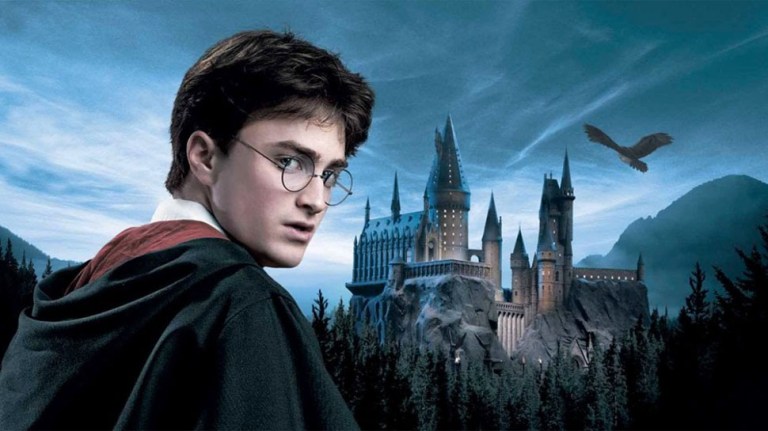
4. The Harry Potter series – JK Rowling: Someone from my generation can’t have a top 10 book list without Potter. This, just like Ready Player One, is a classic story of good versus evil. On top of that, Rowling created a world the reader could not only visualize but immerse himself in. Every fan of Harry Potter has attended Hogwarts and fought in The Battle of Hogwarts. We have our favorite characters and know into which Hogwarts house we would be sorted. We went to midnight book release parties and movie premeirs. Harry Potter is more than a book; it’s a culture. Aside from this, the series has a special place in my heart for sentimental reasons. Every single book, 1-7, my dad, my brother, and I read together, out loud. Even when I was old enough to read them on my own, we continued the tradition. Some of my all-time favorite childhood memories include the reading of Harry Potter. No other book can compete with that.
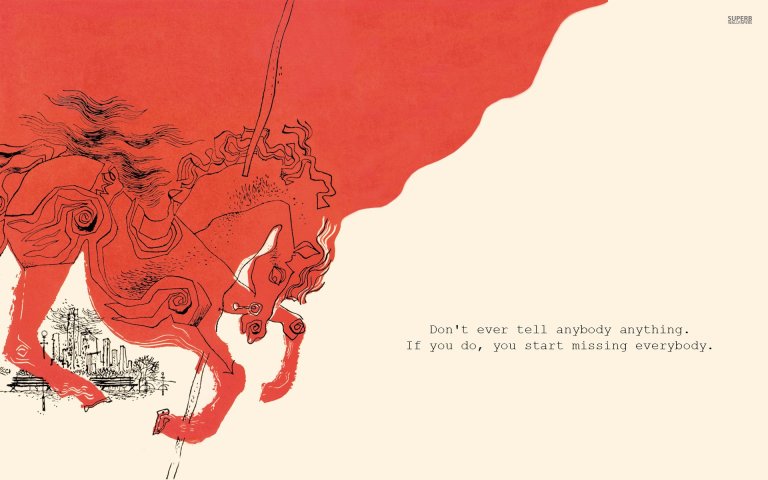
5. The Catcher in the Rye – JD Salinger: When I was a sophomore in high school, I was required to read this book. It was the very first book I read in which I discovered that someone else felt the same way as me. I felt like no one else saw the world like I did until I read this book. I was Holden Caufield. As an adult, part of me is concerned that I ever felt like him and the other part of me thinks that all teenagers are a little bit depressed and confused about life and scared about becoming an adult. I taught this book last year (much to the surprise of other teachers as it is controversial) and was disappointed to discover that my students could not relate to Holden in the same way I did. They enjoyed the book, but they didn’t understand him. It must be a difference in generation. Regardless, Holden will always be the voice of my teenage self, the voice of the girl inside me who still fears a loss of childhood innocence, who still thinks most people are phony, and who still sometimes wants to run from responsibility.
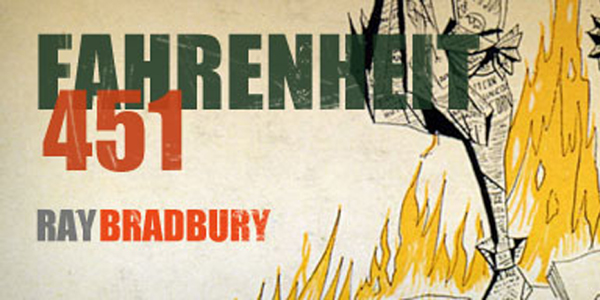
6. Fahrenheit 451 – Ray Bradbury: This is the book I answer with when someone asks me what my favorite book is. I absolutely love dystopian novels, but I am pretty picky about ones that I believe are truly good dystopian novels. This, to me, is the ultimate dystopian novel (rivaled only by 1984). The thing that is so brilliant about F451 is that it legitimately scares me. I can actually see it becoming reality one day. In the novel, society doesn’t disintegrate because the government becomes super evil. It disintegrates because people decide they would rather have pure pleasure (drugs, entertainment, speeding, etc.) than books and education. Every time I read this book though, I am reminded that there will always be people who risk their lives to save books when other people want to destroy them. There will always be people who will fight for free speech when others want to silence them. This book is my ultimate fear and my ultimate hope, the conflict of our current society written years before we even deteriorated to this state.
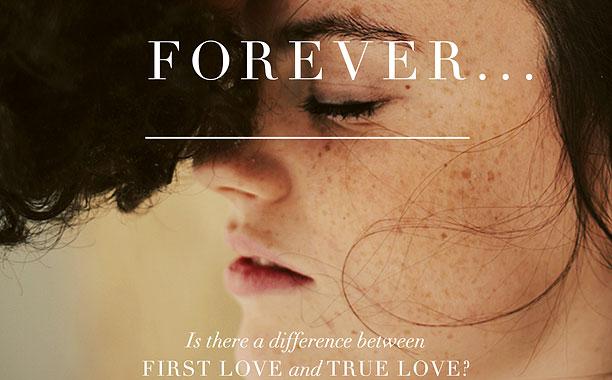
7. Forever… – Judy Blume: Some of you may not know this, but Judy Blume wrote several young adult novels not just children’s books. I read Forever…, one of her most popular books, when I was in high school. I might have been a freshman or a sophomore, I don’t remember. My parents let me read whatever I wanted as a young adult and, for that, I am blessed. When I read this book, I did not know it was so controversial. It has taken heat for it’s open discussion of sexuality (teenage sex and homosexuality), suicide, and birth control. The reason this book is included on my list is not because its topics are so contentious. It’s because it was the first book I read that touched on these things. I mean, I knew these things were realities, but I didn’t understand them until I read this book. Ultimately, this book destroyed a piece of my innocence but in a positive and not at all traumatic way. It also allowed me to learn about sensitive subjects safely. My parents always had an open door for me to ask questions, but I don’t think I would’ve even known what to ask if it hadn’t been for this book. I guess what I am trying to say is that this book is included because, like most Judy Blume books I read, it allowed me to grow up a little bit. For that, I am grateful to her.
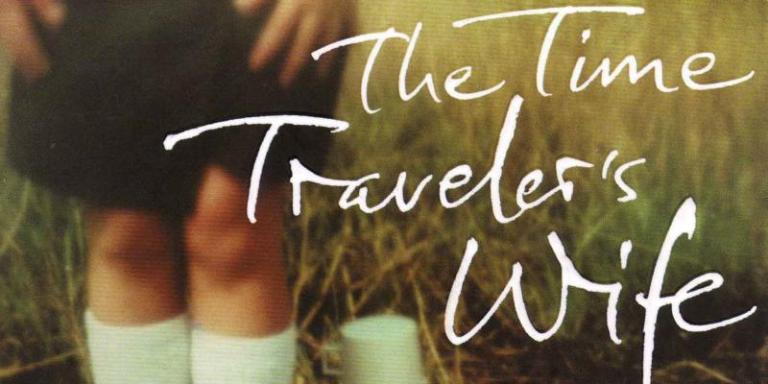
8. The Time Traveler’s Wife – Audrey Niffenegger: Let me start this explanation by stating that I absolutely hate romance novels. Romance novels, in my mind, typically come in one of two forms: young adult romance (think Twilight which I, admittedly, did enjoy as a teenager) and adult romance (think Fabio and Fifty Shades of Grey). Honestly, most of these are poorly written. If other people enjoy them, there is no shame in that, but I usually can’t get over the cheesy writing and overused plot lines. That being said, The Time Traveler’s Wife is a romance novel and it’s a damn good one. In my opinion, it’s one of very few good ones. If you haven’t read it, read it. It’s not cheesy. It’s not written for women only. The plot is unique, the writing is wonderful, and the characters are realistic. It’s a love story with a fantasy twist. It’s romance perfected.
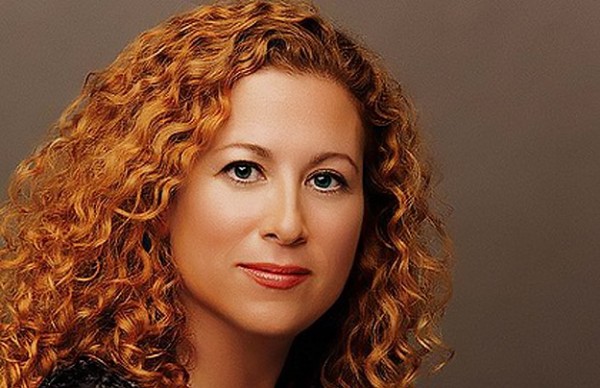
9. Jodi Picoult: Picoult is the second contemporary author (the first being Stephen King) that I ever read. I started with her most famous novel, My Sister’s Keeper, and have read all but 4-5 of her books. She tackles difficult issues (e.g. school shootings, suicide, cancer, homosexuality, the Holocaust, etc.) with grace and without fear. She has often made me question my own convictions as she reveals and explores multiple sides to a single issue. In addition to this, she is a wonderful writer. Her metaphors and characters are what stand out to me the most. Plus, it’s nice to be a fan of an author who is still writing books; I get really excited waiting for her next novel to be published!
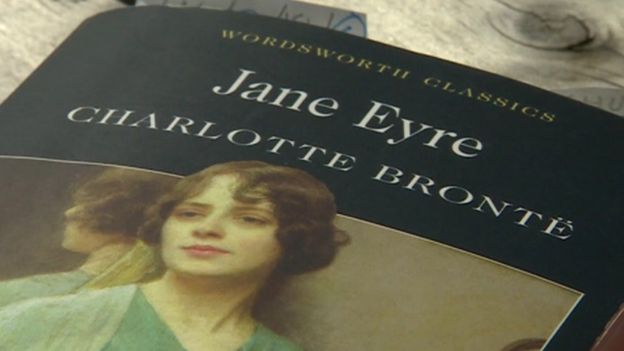
10. Jane Eyre – Charlotte Brontë: To be completely honest, I don’t remember the complexities of the plot of this novel. I do remember how I felt when I read it though. It’s the first book I ever read in which the female protagonist was her own hero. She didn’t need a man to make her happy, but she wasn’t anti-love either. She fell in love, but she had high expectations for the man she fell in love with, and she was willing to walk away when he didn’t meet them. (As a side note: Her expectations were totally rational, not something artificial and stupid. She didn’t need him to have a six-pack; she just wanted him to be honest with her about his psychotic wife that he locked away under the care of his drunk servant. Is that really too much to ask?) Also, she didn’t settle. She had the option to marry a different man, but she didn’t love him, so she walked away. She was strong and independent and, as a young woman, I wanted to be that way. Jane Eyre was a core part of my own personal dating philosophy.
If you’ll allow me to say a little bit more (if you’ve made it this far in this long post, that is), I want to add that this was an extremely difficult exercise. There are so many other books I love, but it would take much to long to list them here. It pained my heart to not include certain books (such as The Night Circus or The Circle), but I feel like this list gives people an accurate picture of me as a reader and a person. These books were foundational for me not only as a reader but as a person. Some of these books influenced how I fit in the world, how I understood the world, and what I believe about the world. Others just make me happy. The great thing about reading is that you can experience the world in so many different ways and, because of that, you can finish reading a book and suddenly be a different person. It was the great Stephen King who said, “books are uniquely portable magic.” I’d have to agree.
–Mads
 Kyle+Mads