The education world loves acronyms, probably more so than it should. Everything we do has to have an acronym: ICR, PLT, PTO, ISS, ALC, IDEA, LD, DPI, etc. For those of you who aren’t in education, let me make it easy for you: “BT” stands for Beginning Teacher. The BT Program lasts for three years in Wake County. You are assigned a mentor and have to attend BT meetings once a month. It’s a great program; being around other BTs full time makes your fumbling seem a bit less embarrassing. Now that I have finished the program and will be given a full teaching license, the fumbling doesn’t happen quite as often as it used to. In fact, I’ve basically learned how to avoid it. Forgot copies in the copy room? Guess we’re doing some silent reading instead of that worksheet today. Year 1 BT Ms. Murphy would have panicked. Year 3 BT Mrs. Doss just shrugs and reminds herself that she’s human; she can use the worksheet another day. How did I, a teacher with a type A personality, become the easy-going teacher you know today? Well, I’ve learned a lot this year. This “a lot”, however, can really be boiled down to one simple thing:
They’re human, and you’re human. Act like it.
As people, we all seem to have this idea ingrained in us from an early age, the idea that teachers are the supreme rulers of the classroom. In fact, I think we teachers like to think that we are the overlords of our domain, and our students are there to soak up our knowledge with glee. If you’ve been teaching for a while, you know this really isn’t how it works. In fact, I don’t think it should work that way. We need to stop viewing teaching as though teachers are on some level way above the students, so much so that we forget they’re human–and we are, too.
I made a poster for my classroom this year that said, “I’m tired of adults telling me how stupid teenagers are.” It’s a misquoted statement from John Green in which he said, “I’m tired of adults telling teenagers that they aren’t smart.” Regardless of my misquoting, another teacher once saw it and said to me, “It should really say, ‘I’m tired of how stupid teenagers are,’ am I right?” No, you’re not right. And, if that said teacher is reading this, I’m not writing this to call you out as being a bad teacher. In fact, you’re an excellent teacher who I greatly admire; maybe you were just having a rough week. Or, maybe you held onto this idea that we should all avoid, the idea that we are so much better than the students in our room.
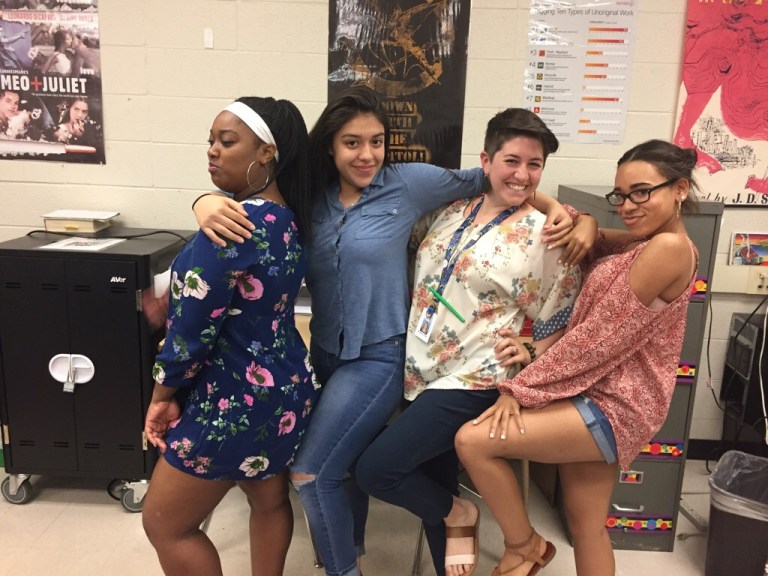
My classroom management policy is based on the idea that my students and I are equal. We’re both humans, we’re both deserving of respect, and we both don’t like being treated like we’re idiots. The only difference between my students and me is that I’ve been doing life a little bit longer, and I know a little bit more than they do. My job is to give them the skills to learn that “little bit more.” I, therefore, don’t treat my students like they’re stupid. They’re not stupid just because they don’t know something yet. I, therefore, don’t yell at my students. I don’t want to be yelled at, so neither do they. I want someone to give me a second chance when I screw up, so I’m going to give second chances. I want to be loved, so I’m going to love my students. If I teach with the knowledge that the teenagers in my room are people, too, I teach with much more patience and love and joy. Sure, they still drive me crazy sometimes, but that’s also because we’re both human.
This lesson seems pretty simple; it seems like a “well, duh” kind of thing. It is not, however, so easy to put into practice. To stand above students every day and remind myself that they’re human can be challenging. Sometimes I expect them to be these perfect robots who do everything I want them to do the first time without asking me to repeat the directions. It takes patience to treat the students like they’re human. It takes energy to remind myself that I am human; I am not the supreme overlord of the classroom. Because I am human, I’m going to be messy, so I might as well embrace it. The teenagers are going to be wild, so I might as well channel their wildness into productivity. We’re both human, so the least I can do is act like it.
 Kyle+Mads
3 thoughts on “Teaching Year 3: End of BT”