“Heavy is the head that wears the crown.” – Henry IV, Part 2, William Shakespeare
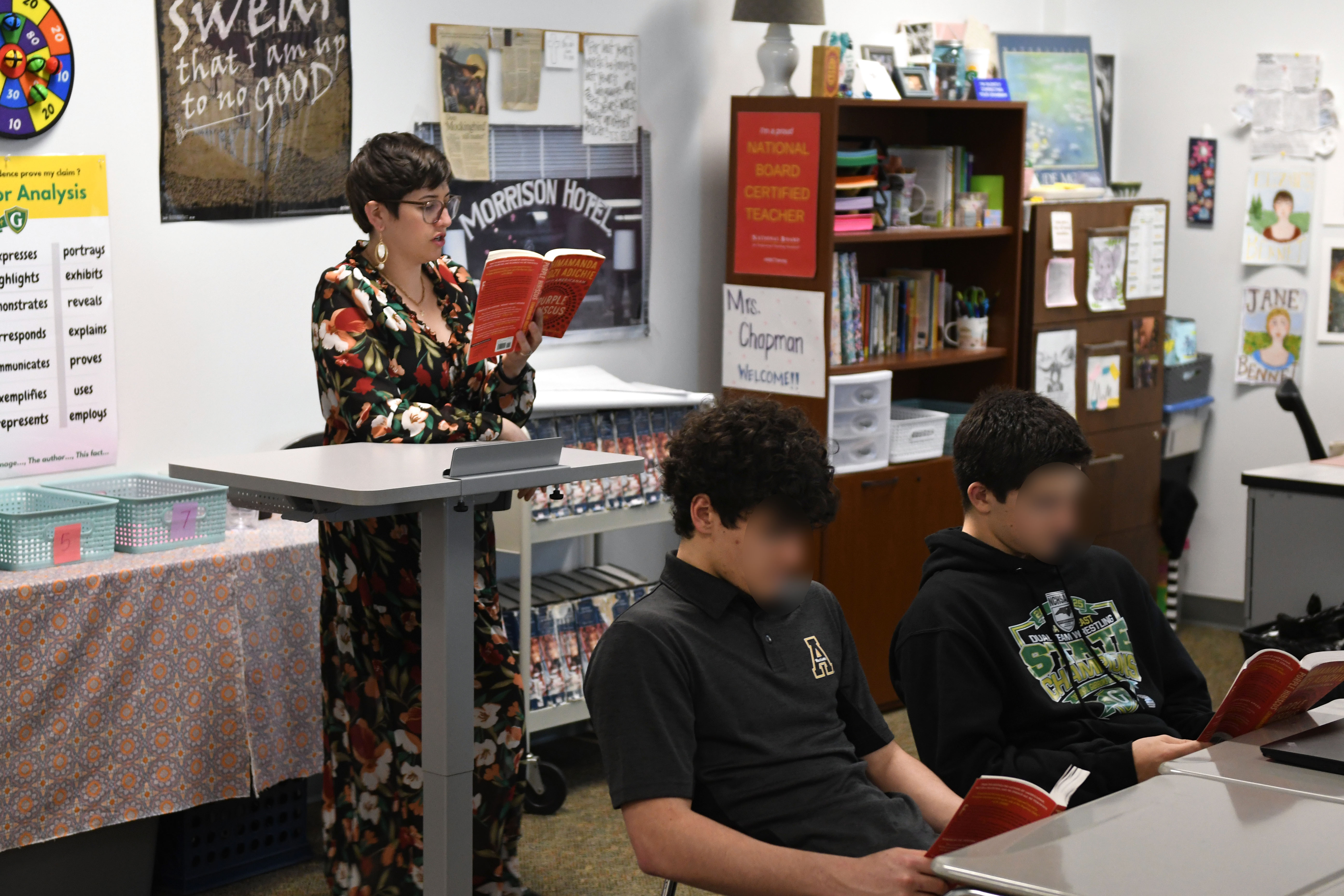
The start of a second decade of teaching brought fresh concerns. In the very early years of my career, I was concerned about survival (How would I get it all done? How would I deal with the workload and student problems and curriculum demands?). As time passed, I became more concerned about effective teaching methods (What’s the best way to get my students to master this skill? How can I make this both engaging and rigorous?). In the past couple years, I sought deeper meaning (Am I making a difference really? Do I actually enjoy this? Is this where I want to spend my life?). These questions that drove me in the first 10 years of my career have been largely settled by experience, a variety of shifts in educational trends, and a move to a new school. Now, my thoughts about teaching are largely concerned with the personal and spiritual impact I have on students. I know I am a strong teacher of content, that my students learn the subject of English in my class. Yet, I’ve realized that there’s so much more to my potential impact on my students. At Gibbons, I’ve had the freedom to select the literature I teach in my classroom, and I find myself selecting books that challenge students on political, spiritual, and ethical issues. As a teacher at a Catholic school, I feel an abiding responsibility to represent the faith well, to push my students to think about their own beliefs, to encourage us both to wrestle with the morally gray, to reconcile the good and evil that lives within every human. This year, we read a novel with an allusion to the Shakespeare quote I opened this post with, and I found the words rattled me: there is a burden to this much responsibility, to the ~130 students who have been entrusted into my care.
“Pastor Pastorum” – Latin for “Shepherd of Shepherds” as used as part of the Pope’s title
The idea of mission been on my mind, especially since the newly elected Pope Leo XIV has chosen to emphasize it in these early days of his papacy. His call is nothing new, however. In 1919, for example, Pope Benedict XV wrote an apostolic letter titled “Maximum Illud,” stating that all Catholics participate in the Church’s call to spread the Gospel. Even more recently, in 2019, Pope Francis said that sharing the Gospel “is part of our identity as Christians.” In short, as Christians, we are always “on mission” regardless of whether you are a literal missionary in a foreign land or simply working in a secular office. And, wherever you are on mission, you have not just been plopped there by chance; it’s a calling. Your position is a combination of assenting to God’s divine will and His own divine Providence. I have been asking myself–quite a bit–what it means to share the Gospel in the Catholic school, a place where faith formation is baked into education and students could, for the most part, recite the basic tenants of the faith. What is, then, the responsibility of a Catholic educator?
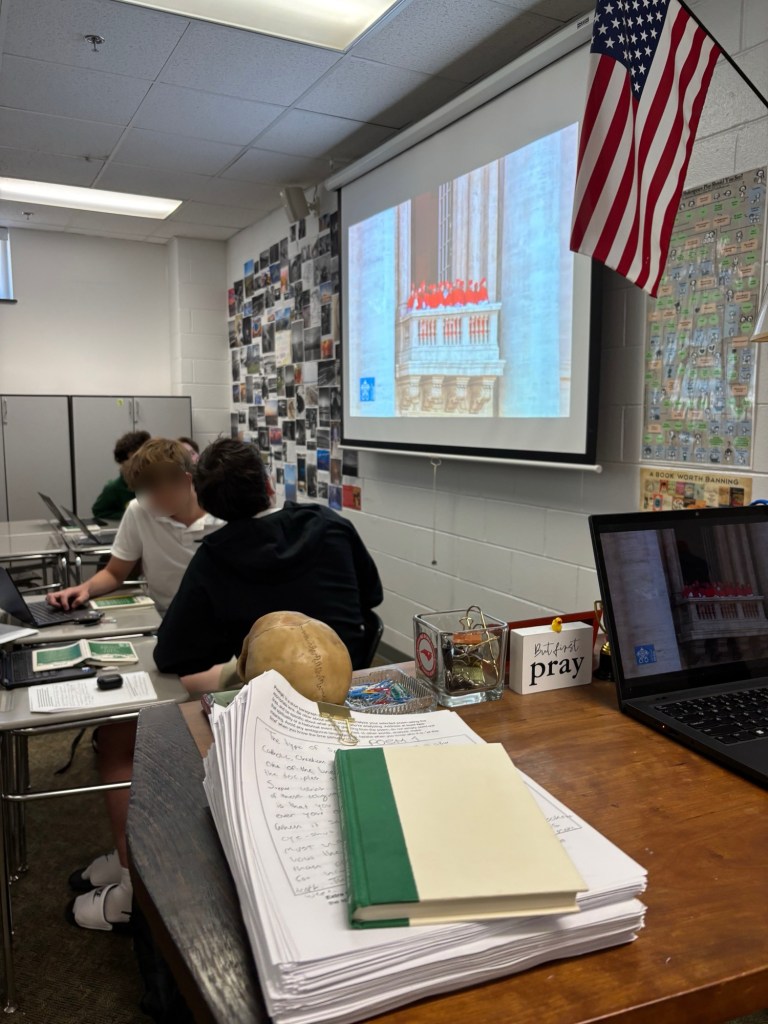
Watching the election of Pope Leo XIV with my students created an environment ripe for Catholic education. Filled with questions about how the conclave works and who gets elected, my students were abuzz with the excitement of a new pope. Answering their questions pushed me also consider the role of the pope. I learned recently that popes add “P.P.” at the end of their signatures, an abbreviation for the Latin term for Shepherd of Shepherds. The role of pope is truly one of service, of representing Christ on earth, of “not coming to be served, but to serve” (Matt. 20:28; Mark 10:45). He’s not just the leader of the Church; he is in service to the Church. We are all, however, like the Pope, called to be like Jesus. Paul says, “Be imitators of me, as I am of Christ” (1 Corinthians 11:1). And, Jesus Himself says, “I have set you an example that you should do as I have done for you” (John 13:15). To be a leader is to be a servant, I was reminded, but that still left me with immense responsibility: how was I to be a servant leader as a teacher?
“Not many of you should become teachers, my brothers, for you realize that we will be judged more strictly, for we all fall short in many respects.” – James 3:1-2
As any good educator knows, reading is the key to success. Recently, I read this article from The Cardinal Newman Society, an organization whose mission is “to promote and defend faithful Catholic education.” The article, while a worthwhile read as a whole, included one line that stuck out to me: “Every person and every relationship matters on the path to holiness. These relationships are deeply human and spiritual. They must be respected and used to achieve the wholistic mission entrusted to the teacher by the Church. While academic disciplines differ in specifics, they all find their source in God… Catholic schools must show students how the truths of different academic disciplines relate to each other so that they illuminate each other and reality, leading to an appreciation for the unity of all truth and to Christ himself.” What an immense and striking responsibility that we have undertaken!
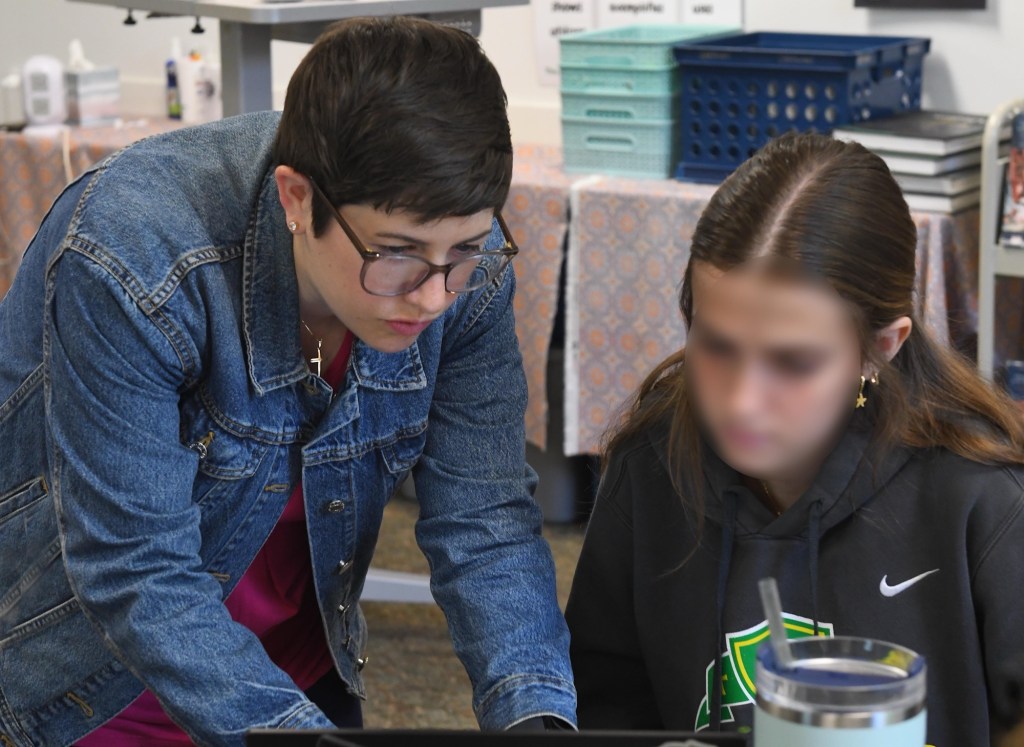
There is always a temptation to lean into the burden of the Lord’s calling, to see it as an impossible mountain, a task that can never be done perfectly. Matthew 5:48 says, “Strive to be perfect, just as your heavenly Father is perfect.” Alone, this verse is terrifying. Yet, Matthew 11:30 says, “For my yoke is easy and my burden is light.” How do we reconcile the supposed ease of Christ’s burden and the weight of attempting perfection? Must I convert the hearts and minds of all my students? Must I ensure they know and love the Lord? The answer is that we, alone, do nothing. We cannot do anything. Yes, there is a responsibility and a burden to teaching, but God does not abandon us in our weakness. We are temples of the Holy Spirit, our souls eternally fused with the Lord’s, and He does the heavy lifting. My job then, as a Catholic educator, is to pray and to submit to God’s will, to be willing to be his instrument to affect the hearts and minds of my students. I often pray that a lesson on motif or poetry or any number of things might lead to the opportunity to draw my students closer to the Lord. I like to think that, sometimes, I do. And, I have been lucky enough to have had moments to speak about our Savior with students outside the classroom as well. My words, like Paul says of his many times, are nothing special. Yet, the Living God who lives in me can breathe life and beauty and truth into those words and, so, affect my students.
“I am the vine, you are the branches. Whoever abides in me, and I in him, will bear much fruit. Apart from me you can do nothing.” – John 15:5
In essence, what I learned this year is that the responsibility of working in a Catholic school is not really much different from the way God and the Church call me to live my life every day, everywhere: stay close to the Lord, model Christ as best I can, and rely totally and completely on His Spirit to do the real work. We are promised that those who abide with Him will bear fruit. It just takes submission, trust, and a whole lot of prayer.
–M
Previous years’ reflections: Year 1 | Year 2 | Year 3 | Year 4 | Year 5 | Year 6 | Year 7 | Year 8 | Year 9 | Year 10
 Kyle+Mads